
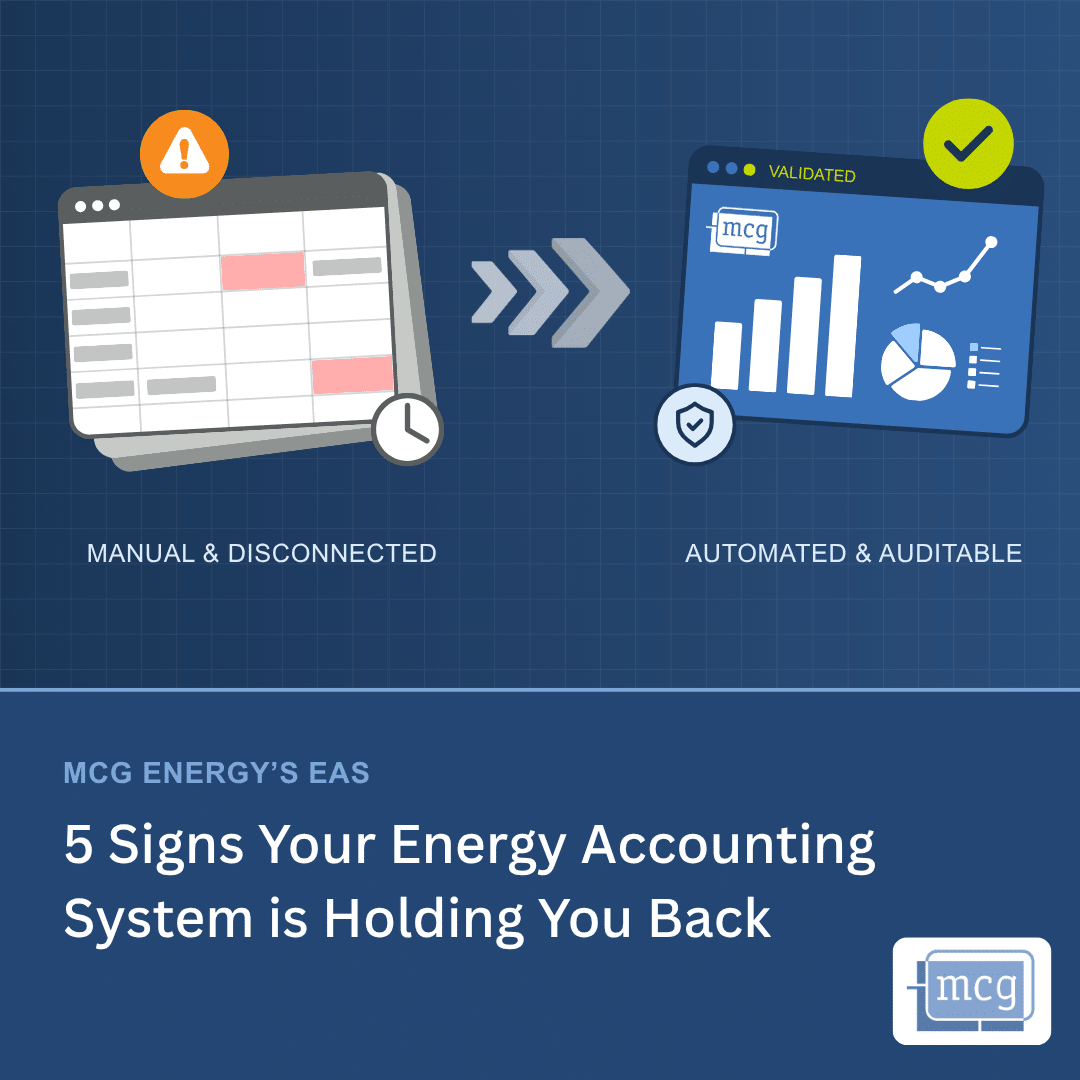
The problem usually isn’t a lack of data. Most teams have plenty of it. The real challenge is turning that data into accurate, timely financial results without three people and a shared spreadsheet standing between the numbers and the close.
If any of the following sound familiar, it might not be your team that’s struggling — it might be the system underneath them.
1. Every Month-End Close Feels Like a Fire Drill
Every accounting team expects close to be busy. But if it means days of manual reconciliation, chasing down discrepancies across five different systems, and hoping nothing breaks before the deadline, that’s not a staffing problem — it’s a systems problem.
By the time month-end rolls around, most energy accounting teams are pulling data from trading systems, scheduling applications, meter data systems, settlement platforms, billing tools, and the ISO itself. When more time goes into gathering and validating that data than analyzing it, something upstream is broken.
The best energy accounting platform should be doing the collecting, validating, and reconciling automatically — tracking multiple data sources for a given meter and prioritizing them to land on the best available value, so your team is reviewing exceptions instead of re-deriving numbers from scratch.
The honest question worth asking: can your team explain a variance in minutes, or does it take days just to find one?
2. Spreadsheets Have Secretly Become Your System of Record
Spreadsheets are useful. The trouble starts when they stop being a helper and become the actual infrastructure. They become the place where settlement calculations, revenue allocations, load adjustments, and regulatory reports actually live.
As volume grows, manual entry across disparate systems gets harder to maintain, harder to audit, and easier to get wrong. This shows up in more than one place. Financial adjustments get tracked in spreadsheets. Shift events get logged manually, without dedicated operator logging software. Either way, disconnected tracking creates critical operational gaps.
A broken formula or an undocumented adjustment can ripple into financial reporting, customer invoices, or a settlement, and nobody notices until it’s already a problem.
3. Billing & Settlements Require Constant Manual Review
Settlement data across power and gas markets keeps getting more complicated, and a lot of teams respond the only way they can: by reviewing everything by hand. Statements, charge calculations, cross-checks against market data, invoice adjustments. All of it, every cycle.
Oversight matters. But manually validating thousands of line items isn’t oversight, it’s a workaround for a system that can’t tell you what actually needs attention.
The better version of this looks like tolerance checking and configurable validation rules that flag suspect values automatically — bad reads, stuck meters, dated data — so your team is looking at the handful of transactions that genuinely need a human, not all of them.
4. Operations and Accounting Work from Conflicting Data Sets
This one shows up in meetings before it shows up in the financials. Operations, scheduling, trading, and accounting are each working from their own data, their own reports, their own version of “correct,” while a good chunk of every meeting goes to reconciling whose numbers are right before anyone gets to discuss what to actually do about them.
That’s usually a sign that information is scattered across too many systems with no shared source of truth. When everyone is looking at the same validated data set — the same meter profiles, the same rollups, the same calculation logic — those conversations go away, and decisions happen faster.

5. General-Purpose Accounting Software Fails Energy Markets
- New market structures.
- Updated regulatory requirements.
- Another ISO program.
- Renewable integration changing how settlements get calculated.
The energy industry doesn’t slow down for accounting systems to catch up, but too many systems require a manual workaround, a custom build, or a full process redesign every time something shifts.
An accounting system designed for the energy industry specifically, and not adapted from general-purpose accounting software, should flex with those changes without forcing a rebuild each time. That’s the real test of whether a platform was built for energy markets or just pointed at them.
The Costs of Maintaining Legacy Energy Accounting
Legacy processes stick around because they’re familiar, not because they’re working. The real cost usually isn’t visible in any single month. It shows up as longer close cycles, more headcount just to keep pace, higher audit complexity, and slower decisions across the business.
Getting past that isn’t about replacing your team. It’s about giving the people already doing the work a system that handles the repetitive parts — data validation, reconciliation, rollups — so they can spend their time on the analysis and judgment calls that actually require a person.
Streamline Your Operations with MCG’s Energy Accounting System (EAS)

MCG’s Energy Accounting System (EAS) was built around exactly this problem: tracking and validating multiple data sources for a single meter, ranking them to generate an official profile from the best available data, and flagging bad reads or stuck meters before they become a settlement problem. Its calculation engine handles everything from simple multipliers to complex conditional relationships, with full rollup and drill-down visibility from generation to load to ties.
For ISO customers, EAS handles full Meter Data Management Agent (MDMA) functions in one place, including validations, rollups, and ISO market submissions. It also connects natively to the systems you’re already running, from regional platforms like EIA, and WECC to internal tools like PI, EMS, and your load forecasting system. Add-on modules like GridBill and Jurisdiction Load Manager extend that same foundation into billing and multi-jurisdiction load management, without asking your team to stitch together a separate system.
If your accounting process is still leaning on spreadsheets and manual reconciliation, it’s time to rethink your tech stack. Contact MCG Energy with the form below to discover how the right platform can eliminate month-end bottlenecks and help your business scale.
How can we help?
Tell us a bit about your needs and one of our energy software specialists will reach out shortly.

David Peterson, Ph.D. is the content specialist for MCG Energy Solutions.